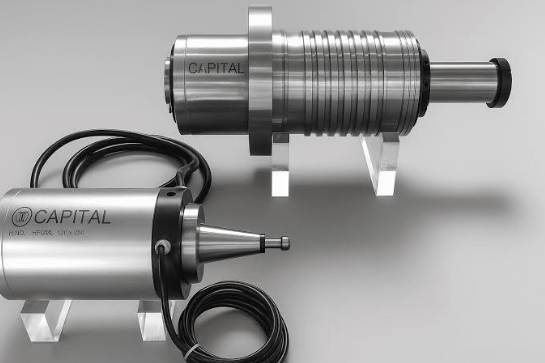
The spindle is a central component of many CNC machines because it provides the rotational motion required for cutting, drilling, engraving, milling, and other machining operations. Selecting the right spindle requires more than simply choosing the highest available power or speed.
Machine type, material, tooling, operating speed, torque, cooling, bearing quality, and compatibility all influence spindle performance. A suitable choice should match the actual requirements of the machining process.
For businesses evaluating equipment options, understanding the role of a CNC spindle motor can help create a more structured selection process.
Start With the Machining Application
The first question should be: what will the CNC machine actually be used for?
Different applications place different demands on the spindle. Engraving soft materials, cutting wood, machining aluminum, and processing harder materials may require different combinations of speed and torque.
Consider:
- Material being machined
- Cutting depth
- Tool diameter
- Required surface finish
- Production volume
- Typical feed rate
- Required RPM range
The more clearly the application is defined, the easier it becomes to identify an appropriate spindle.
See also: Redeem or Save? A Practical Framework for Loyalty Point Decisions
Understand Power Requirements
Spindle power is commonly expressed in kilowatts. Higher power can provide greater machining capability, but more power is not automatically better for every machine.
A small engraving machine may not need the same spindle capacity as a heavy-duty milling system.
Excess capacity can increase equipment cost, electrical requirements, and cooling demands without providing a practical advantage for the intended application.
The goal is to select a spindle that provides sufficient power for the expected workload.
Consider RPM and Cutting Speed
Rotational speed is another major factor. Some machining processes benefit from high RPM, especially when using small cutting tools.
However, speed must match the tool, material, cutting parameters, and spindle design.
Operating at unnecessarily high speeds can increase heat, vibration, and tool wear.
For this reason, the required RPM range should be considered alongside power and torque rather than viewed independently.
Torque Matters Too
Power and RPM do not tell the entire story. Torque influences the spindle’s ability to maintain cutting force under load.
Certain machining operations require stronger low- or medium-speed performance, while others emphasize high-speed operation.
A spindle should therefore be evaluated according to the balance between speed and torque required by the machine.
Check Tool Compatibility
Tool holding is an important part of spindle selection. Different spindles may support different collet systems or tool interfaces.
Before purchasing, verify:
- Collet type
- Maximum tool diameter
- Tool-changing requirements
- Compatible tooling
- Required accessories
A spindle with excellent specifications can still be unsuitable if its tool interface does not match the machine’s tooling system.
Cooling Requirements
Spindles generate heat during operation. The cooling method helps control operating temperature.
Common approaches may include air cooling or liquid cooling, depending on spindle design and application.
The choice should consider operating duration, ambient conditions, machine enclosure, and maintenance requirements.
Cooling equipment also needs proper installation and regular inspection.
Bearing Quality and Stability
Bearings support the rotating shaft and influence smooth operation. Quality bearings can contribute to reduced vibration, improved accuracy, and longer service life when properly maintained.
Signs such as unusual noise, excessive vibration, or increasing runout can indicate that inspection is needed.
Bearing selection becomes especially important for applications involving high rotational speeds.
Consider Machine Compatibility
A spindle must physically and electrically integrate with the CNC machine.
Before installation, verify:
- Mounting dimensions
- Electrical requirements
- Drive or inverter compatibility
- Cooling arrangement
- Control signals
- Shaft and tooling specifications
Compatibility should be confirmed before ordering rather than discovered after delivery.
Think About Duty Cycle
A spindle used occasionally for light engraving has different requirements from one operating continuously in a production environment.
Consider how long the spindle will run during a typical cycle and how frequently the machine will be used.
Heavy production applications may require equipment designed for sustained operation and appropriate thermal management.
Maintenance and Service
Regular maintenance can help preserve spindle performance. Maintenance requirements depend on the spindle design, but users should monitor operating temperature, vibration, noise, cooling performance, and tool-holding condition.
Keeping the spindle and surrounding machine clean can also reduce contamination-related problems.
When abnormal behavior appears, stopping the machine and investigating the cause can prevent a minor issue from becoming a more expensive failure.
FAQs
1. How do I choose the right spindle for a CNC machine?
Start with the materials, machining operations, tool sizes, required RPM, torque, power, duty cycle, and machine compatibility. The spindle should match the actual application.
2. Is a higher-RPM spindle always better?
No. The appropriate speed depends on the material, cutting tool, machining method, and system requirements. Excessive speed can create heat and vibration.
3. Why is cooling important for a spindle?
Cooling helps control heat generated during operation. The appropriate cooling method depends on spindle design, workload, operating speed, and application.
Conclusion
Selecting a spindle is an important CNC equipment decision. Power, RPM, torque, tooling, cooling, bearings, duty cycle, and machine compatibility all need to be evaluated together.
Instead of choosing based on one specification, users should begin with the machining application and then identify the spindle characteristics that support it. Careful selection, correct installation, and regular maintenance can help create a reliable CNC machining setup.