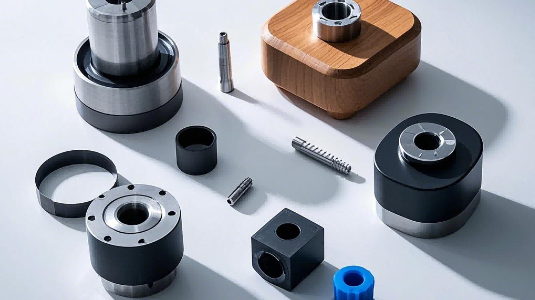
Mechanical assemblies often contain dozens or even hundreds of individual components. Each part must work with the others to create a reliable finished product.
Fasteners are among the most important of these components because they establish and maintain connections between separate parts.
Selecting an appropriate fastener requires attention to dimensions, material, design, environment, and installation requirements.
Start With the Joint
The first step is to understand the joint itself.
Engineers should determine the materials being connected, expected loads, available installation space, environmental conditions, and whether the connection will need to be removed later.
These factors help determine the appropriate fastening solution.
Head Design
The head of a fastener affects how it is installed.
Hexagonal heads are widely used because they provide surfaces for standard tools.
An integrated flange adds another functional feature by increasing the bearing area beneath the head.
See also: The Science Of Chance: How Probability Shapes Games, Technology, And Everyday Life
Why a Larger Bearing Surface Can Help
When a bolt is tightened, force is transferred from the head into the material.
A larger bearing surface can distribute that force across a wider area, potentially reducing localized pressure.
The actual effect depends on the material and design of the joint.
Material Selection
Material should be chosen according to the application.
Titanium is attractive for selected applications because of its relatively low density and corrosion resistance.
However, the cost and mechanical requirements must also be considered.
Thread Specification
Threads must match the mating component.
Important factors include diameter, pitch, length, and tolerance.
For metric applications, the nominal diameter alone does not provide enough information to define the complete fastener.
Corrosion and Compatibility
If the assembly operates in a wet or chemically aggressive environment, corrosion resistance may become a major priority.
Engineers should also consider the interaction between the fastener and surrounding metals.
Appropriate material combinations and protective measures can help improve long-term reliability.
Installation
Installation procedures should be standardized where possible.
Technicians should use suitable tools and follow the specified tightening method.
For critical assemblies, torque verification or additional inspection may be required.
Supplier Quality
Supplier selection can influence component reliability.
Buyers should evaluate manufacturing consistency, inspection processes, material documentation, packaging, and technical communication.
Long-term suppliers should be reviewed periodically to ensure quality remains consistent.
FAQs
1. How should a fastener be selected?
Start by reviewing the joint design, loads, environment, head flange material compatibility, dimensions, and installation requirements.
2. Why does head design matter?
The head determines how the fastener is installed and how force is transferred into the connected surface.
3. What should buyers confirm with a manufacturer?
They should confirm material, dimensions, thread specification, surface requirements, quality expectations, quantity, and applicable standards.
Conclusion
Selecting fastening components is an important engineering task. A suitable design should provide reliable connection, practical installation, appropriate load distribution, and resistance to the conditions expected during service.
Careful specification and supplier evaluation can help manufacturers avoid common procurement and assembly problems while improving the reliability of finished products.