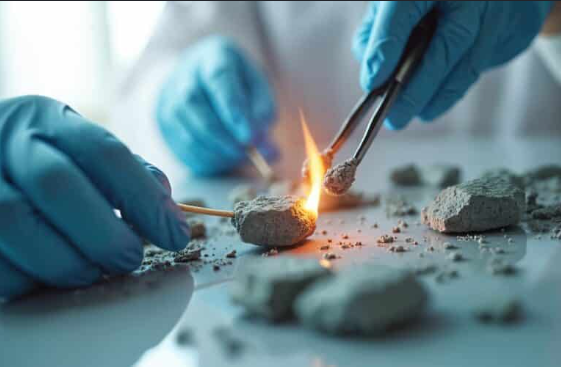
Product development often involves testing materials and components under conditions that simulate environments they may encounter during use, transportation, or storage. Temperature is an important factor because it can influence physical and functional characteristics.
A Benchtop Thermal Chamber can provide a controlled environment for laboratory-scale testing when the required conditions and sample sizes are compatible with the equipment.
Why Temperature Testing Is Used
Temperature testing can reveal how a product behaves outside normal laboratory conditions.
Researchers may observe changes in dimensions, material properties, electrical performance, or other characteristics.
The purpose is not necessarily to reproduce every possible real-world condition, but to create controlled environments that answer specific research questions.
See also: The Science Of Chance: How Probability Shapes Games, Technology, And Everyday Life
Begin With a Test Plan
A clear test plan should define what will be tested and what information researchers need to collect.
The plan may specify temperature levels, exposure periods, cycling patterns, sample quantities, measurements, and acceptance criteria where applicable.
A well-defined plan reduces uncertainty during the experiment.
Choose Equipment Based on Requirements
The testing chamber should be selected after the test requirements have been established.
Important specifications can include:
- Temperature range
- Temperature stability
- Temperature uniformity
- Internal working volume
- Control functions
- Sample capacity
- Installation requirements
The relative importance of each specification depends on the application.
Consider the Product Size
Benchtop equipment is generally more suitable for smaller products and components.
Before purchasing, researchers should measure their samples and consider the required fixtures and sensors.
The chamber should allow the sample to be positioned appropriately without unnecessary crowding.
Consistent Testing Conditions
Consistency is essential when comparing products or materials.
If two samples are being compared, they should be exposed to equivalent environmental conditions as far as the test procedure requires.
This is why chamber uniformity and reliable control can be important factors in laboratory testing.
Recording Observations
Researchers should record relevant observations during and after testing.
Depending on the application, this may include visual changes, performance measurements, electrical readings, dimensions, or other data.
Good documentation provides a record of how the sample responded to the test conditions.
Prototype Evaluation
Environmental testing can be integrated into prototype development.
A prototype may perform successfully under normal conditions but show different behavior when exposed to a wider temperature range.
Testing can provide information that helps engineers investigate design choices and identify areas requiring further development.
Comparing Materials
Controlled testing can also support material comparison.
When several materials are exposed to the same environmental conditions, researchers can observe differences in their behavior.
The comparison should use a consistent methodology so that results are meaningful.
Equipment Maintenance
The reliability of test results depends partly on the condition of the equipment.
Laboratories should follow recommended maintenance procedures and keep records of servicing and calibration where applicable.
Any equipment issue that could affect test conditions should be investigated before important testing is performed.
Installation and Operation
A benchtop chamber should be installed according to the manufacturer’s requirements.
The laboratory should provide appropriate electrical power, ventilation, clearance, and ambient conditions.
Operators should also follow sample loading and temperature-setting instructions.
When evaluating a Benchtop Thermal Chamber laboratories should compare the technical specifications with their documented testing requirements.
Training New Users
Environmental testing equipment may be used by several people in a laboratory.
A standardized training process can help users understand the controls and operating procedures.
New operators should learn how to prepare samples, configure test conditions, monitor operation, and complete documentation before performing independent tests.
Reviewing Test Results
Once testing is complete, researchers should compare the observations with the original test objectives.
Unexpected results should be investigated rather than automatically interpreted as equipment or product failure.
Checking the test conditions, sample preparation, and measurement process can help identify possible sources of variation.
Frequently Asked Questions
1. What can be tested in a benchtop thermal chamber?
Depending on the equipment specifications, smaller components, materials, prototypes, and products may be tested under controlled temperature conditions.
2. Why is temperature uniformity important?
Uniformity helps provide comparable environmental conditions throughout the chamber’s working area, which can be important for certain testing applications.
3. Should test results be documented?
Yes. Recording environmental conditions, sample information, measurements, and observations helps maintain traceability and supports later analysis.
Conclusion
Temperature-controlled testing can provide valuable information during product development, material research, and quality evaluation.
A benchtop solution can be practical for smaller samples, provided that its technical capabilities match the test requirements. A clear test plan, consistent procedures, accurate monitoring, proper maintenance, and detailed documentation are essential parts of an effective environmental testing program.