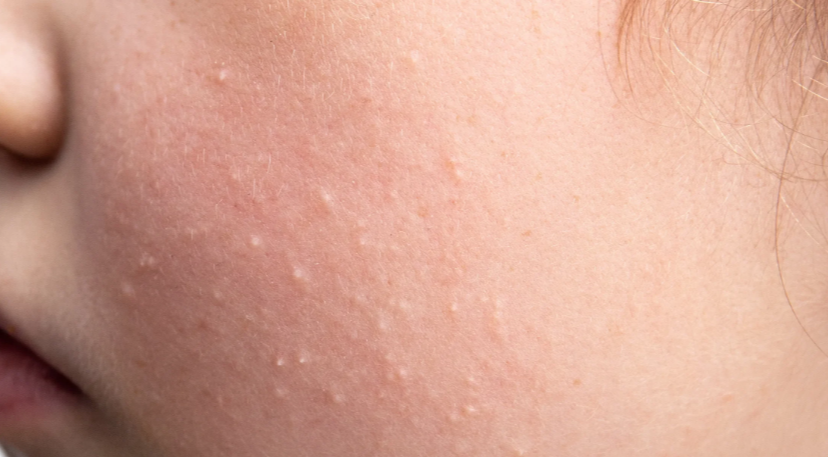
Few skin changes make parents anxious as quickly as white spots on a child’s face. The patches may appear suddenly after summer holidays, become more visible after sun exposure, or slowly increase over time. Parents often begin searching online and quickly come across dozens of possible explanations: fungal infection, calcium deficiency, vitamin problems, vitiligo, allergy, poor immunity, or skin disease. The difficulty is that white spots on the face of child vitamin deficiencyis only one possible explanation among many, and assuming the cause too early can lead to incorrect treatment.
Proper diagnosis matters because white facial patches in children can look similar while having completely different causes. Some are harmless and temporary. Some need moisturising and patience. Some require dermatological follow-up. A few may need nutritional evaluation or medical treatment.
White Patches Are a Sign, Not a Final Diagnosis
The first thing parents should understand is that white patches themselves are not the diagnosis.
They are a symptom that may result from different skin changes, such as:
- Dryness
- Eczema-related changes
- Pityriasis alba
- Post-inflammatory hypopigmentation
- Fungal infection
- Vitiligo
- Nutritional issues
- Irritation
- Allergy-related inflammation
- Healing after rash or injury
Without proper examination, it is difficult to know which one is actually present.
This is why self-diagnosis based on photos or internet comparisons often becomes misleading.
The Same White Patch Can Mean Different Things
Two children may both have pale cheek patches but require completely different treatment.
For example:
- One child may simply have dry skin and pityriasis alba.
- Another may have post-inflammatory changes after eczema.
- Another may have a fungal infection.
- Another may have early vitiligo.
- Another may have irritation from harsh skincare products.
The treatment for each condition differs.
A moisturiser may help one child while doing nothing for another. An antifungal cream may help fungal infection, but irritate eczema-prone skin. Steroid misuse may worsen certain infections while temporarily hiding symptoms.
This is exactly why proper diagnosis is important.
Pityriasis Alba Is Often Mistaken for Deficiency
One of the most common reasons children develop pale facial patches is pityriasis alba.
The condition is usually associated with:
- Dry skin
- Mild eczema tendency
- Rough texture
- Fine scaling
- Sun exposure contrast
- Sensitive skin
The patches are often light-coloured rather than completely white.
Parents frequently mistake these patches for a vitamin deficiency because they become more visible after outdoor exposure. In reality, the surrounding skin becomes darker in the sun while the pale patch stays lighter.
The condition is generally harmless and often improves gradually with moisturising and gentle skincare.
Vitiligo Needs Early Recognition
Not every white patch is vitiligo, but vitiligo should not be ignored when certain features are present.
Vitiligo patches are often:
- Sharply defined
- Bright white
- Progressive in some cases
- Symmetrical in some children
- Seen around the eyes, mouth, fingers, or knees
- Associated with the whitening of hair in the patch in some cases
Vitiligo behaves differently from dryness-related pale patches.
This is why a dermatologist may carefully examine:
- Border sharpness
- Colour intensity
- Distribution
- Hair colour within the patch
- Family history
- Progression pattern
Early evaluation helps guide management and monitoring if vitiligo is suspected.
Nutritional Deficiency Is Possible, But Not Always the Main Cause
Parents commonly assume white spots automatically mean a vitamin deficiency.
Nutritional deficiencies can affect skin and overall health, especially when children also have:
- Poor appetite
- Fatigue
- Hair fall
- Weakness
- Nail changes
- Growth concerns
- Recurrent illness
- Restricted diet
However, isolated facial white patches are not always caused by low vitamins.
A dermatologist or paediatrician may consider nutritional evaluation when the child’s broader health history suggests it is relevant.
Supplements should not replace proper diagnosis.
Fungal Infection Is Frequently Overdiagnosed
Many parents start antifungal creams as soon as they see white patches.
The problem is that fungal infection is not the only reason for pale areas.
True fungal infection may involve:
- Itching
- Fine scaling
- Spread over time
- Irregular borders
- Similar lesions elsewhere
- Scalp involvement in some cases
Children are often treated repeatedly for “fungus” even when the actual problem is pityriasis alba or post-inflammatory pigmentation change.
Incorrect treatment may irritate the skin further.
Skin Texture Gives Important Clues
Dermatologists do not assess colour alone.
Texture matters.
During examination, the doctor may check for:
- Dryness
- Fine scaling
- Roughness
- Inflammation
- Scratching marks
- Redness
- Skin thickening
- Border definition
A pale patch with dryness behaves differently from a smooth depigmented patch. Texture often helps narrow down the diagnosis significantly.
White Patches After Rash or Injury Are Common
Children frequently develop temporary pale patches after inflammation heals.
This may happen after:
- Eczema
- Insect bites
- Allergic rash
- Scratching
- Minor injury
- Irritation
- Previous infection
This is called post-inflammatory hypopigmentation.
The colour often improves gradually as the skin recovers, but the process may take time. Parents sometimes continue treating aggressively because they assume the disease is still active when the skin is actually healing.
Sharp Borders Usually Need Closer Review
Not all pale patches have clear edges.
Some blend gradually into the surrounding skin, while others look sharply outlined.
Sharply bordered patches warrant closer dermatological attention, as they may suggest more specific pigment disorders.
This does not automatically mean something serious, but it does mean that guessing at home becomes less reliable.
A proper examination becomes more important in these situations.
White Spots Can Become More Noticeable in Summer
Parents often notice the patches most during summer holidays.
This happens because:
- Normal skin tans
- Pale patches remain lighter
- The contrast increases
This is common with:
- Pityriasis alba
- Dryness-related hypopigmentation
- Post-inflammatory changes
Sun exposure does not necessarily cause the patches, but it often makes them easier to see.
Children’s Skin Should Not Be Treated Aggressively
One major reason diagnosis matters is to prevent unnecessary treatment damage.
Parents sometimes try:
- Steroid creams
- Fairness creams
- Lemon application
- Harsh scrubbing
- Strong antifungals
- Multiple creams together
- Home remedies from the internet
Children’s skin is delicate. Over-treatment may worsen irritation, damage the barrier, or alter pigmentation further.
A treatment that is safe for one condition may be harmful for another.
Dermatologists Often Diagnose Through Examination
Parents sometimes expect extensive testing immediately, but many childhood skin conditions can be assessed through proper clinical examination.
The dermatologist may evaluate:
- Colour pattern
- Texture
- Scaling
- Distribution
- Progression
- Hair involvement
- Associated symptoms
- Medical history
- Family history
- Previous treatment use
Additional tests are usually considered only when the diagnosis remains uncertain or another condition is suspected.
Family History Can Matter
A dermatologist may ask whether family members have:
- Vitiligo
- Eczema
- Psoriasis
- Allergies
- Asthma
- Autoimmune disease
- Pigmentation disorders
These clues sometimes help explain why the child developed certain skin changes.
For example, eczema-prone families may see more pityriasis alba. Autoimmune patterns may become relevant when vitiligo is suspected.
Proper Diagnosis Helps Avoid Delayed Care
When parents assume every patch is harmless dryness, they may delay evaluation of conditions needing closer monitoring.
When parents assume every patch is vitiligo, they may panic unnecessarily.
When parents assume every patch is a fungal infection, they may use incorrect creams for months.
Accurate diagnosis helps avoid all three problems.
It guides:
- Appropriate treatment
- Monitoring needs
- Nutritional evaluation, if needed
- Follow-up timing
- Safe skincare
- Long-term expectations
Emotional Reassurance Is Part of Treatment
Visible facial patches can make both parents and children anxious.
Children may feel self-conscious at school. Parents may fear permanent pigmentation changes or serious illness.
A clear diagnosis helps families understand:
- Whether the condition is dangerous
- Whether it is contagious
- Whether it is temporary
- Whether it is likely to spread
- What treatment may help
- How long will the improvement take
That reassurance is often extremely valuable.
Signs That Should Prompt Dermatological Review
Parents should consider a medical evaluation if:
- Patches spread
- New spots appear
- Borders become sharply defined
- There is itching or scaling
- Hair within the patch turns white
- The child has eczema or an allergy history
- The patches persist for months
- The child has other health concerns
- Home moisturising is not helping
- The child becomes distressed about appearance
Early review often leads to better clarity and safer treatment.
Questions Parents Can Ask During Consultation
Useful questions include:
- What is the likely diagnosis?
- Is this condition common in children?
- Does my child need tests?
- Is this related to a vitamin deficiency?
- Is the condition contagious?
- Will the colour return fully?
- What products should we avoid?
- Does the child need sunscreen?
- How long may improvement take?
- When should we follow up?
These discussions help parents manage the condition more calmly.
Final Word
White spots on a child’s face can happen for many reasons, including dryness, pityriasis alba, eczema-related changes, post-inflammatory hypopigmentation, fungal infection, vitiligo, and occasionally nutritional deficiencies.
This is why proper diagnosis matters more than assumptions. White spots on the face of a child, a vitamin deficiency is only one possible explanation, not the automatic answer in every case.
A dermatologist can assess the child’s skin carefully, identify the most likely cause, and guide safe treatment or follow-up where needed. In many cases, early clarification helps prevent unnecessary worry, incorrect treatment, and prolonged confusion for families.