The term “package” in residential cleaning is more of a marketing label than a technical term. What it actually points to is a specific list of tasks the crew commits to handling on every visit, the rooms covered, the frequency of the engagement, and the add-ons priced separately. Different cleaning companies build their packages with different boundaries, which is why two services pricing the same square footage can come back with wildly different quotes for what looks superficially like the same scope of work. Reading the actual list of tasks matters more than comparing rates.
San Diego throws in a few of its own variables, too. The coastal climate deposits salt residue that builds up on windows and exterior fixtures. The Mediterranean dust pattern collects on horizontal surfaces faster than what people coming from damper climates expect. And the material mix in San Diego homes (stucco, terracotta tile, hardwood floors, tile counters in older homes, stone in newer ones) means a real crew uses different chemistry on different surfaces inside the same property. So a house cleaning San Diego service that’s actually worked the local market knows which materials show up in which homes and how to clean each one without damaging it.
San Diego residents and renters have several firms to choose from for this kind of work. Clearwater Cleaning is one of the operations that provides house-cleaning services at Ego Cross residential properties of varying sizes. Nothing here recommends any one firm. It’s a walkthrough of what a real professional cleaning package should actually contain, what’s typically extra, and where the line falls between standard service and the deeper cleans most homes need at least once or twice a year.
Recurring Service
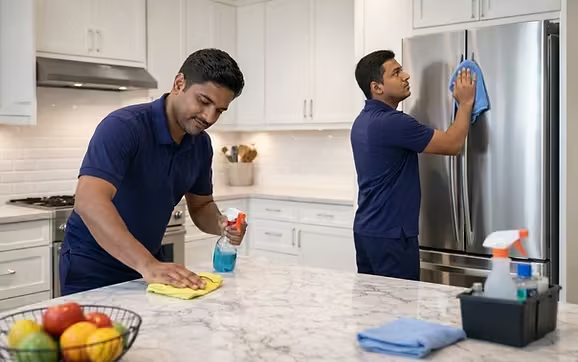
A recurring house cleaning package is built around maintenance work. The kind of cleaning that keeps a home looking and feeling clean week to week without going deep into every corner on every visit. Standard coverage typically reaches all bathrooms, the kitchen, all bedrooms, living areas, hallways, the stairs, and the entry. There’s dusting on horizontal surfaces. Vacuuming carpets and rugs. Mopping the hard floors. Wiping counters and other visible surfaces. Collecting trash from each room. Some light tidying.
What recurring doesn’t cover is the deep stuff. No behind-the-furniture work. No oven interior. No fridge interior. No baseboards every visit, no detailed window interior beyond spot cleaning, no aggressive stain removal. Those are deep-clean items or paid add-ons. A recurring package is meant to maintain the place, not to do once-a-year tasks every two weeks.
See also: Ethical Hacking Explained
Each Room
Kitchens get counters wiped down. Stovetop exterior. The exterior of larger appliances. Sometimes the microwave interior. Sink and faucet. Cabinet fronts where they need them. The floor. Trash. The American Lung Association’sguidance on clean air at home emphasizes that regularly reducing dust and indoor pollutants improves overall air quality. Kitchens are among the rooms where surface cleaning matters most because of cooking residue and humidity-driven biological growth that build up there.
Bathrooms cover the toilet (inside, outside). The sink and counter. The mirror. The tub or shower, including walls and fixtures. The floor. Trash. Bedrooms get dusted, vacuumed, surfaces wiped, trash taken out, and the bed made if the client wants it. Living areas: dust, vacuum, surface wipe, trash. Entries and hallways get vacuumed, swept, or mopped depending on the floor. Stairs get vacuumed each visit.
Deep Cleaning vs. Recurring Service
Deep cleaning is a different scope entirely and a different line on the invoice. It covers everything a recurring service skips. Inside the oven. Inside the fridge. Baseboards throughout the place. Window interiors, including track cleaning. Light fixtures (bulbs and bowls). Cabinet interiors when scheduled. Behind and under the furniture. Grout work in tile rooms. Wall spot cleaning. Vent covers dusted.
Most homes need a deep clean somewhere in the six- to twelve-month range, even with regular recurring service in between. Some properties need one as a kickoff (especially homes that haven’t had professional cleaning for a stretch), and then recurring maintenance handles things from there. The Asthma and Allergy Foundation of America’sguidance on controlling indoor allergens recommends regularly deep-cleaning areas where dust mites and other allergens tend to accumulate, particularly upholstered furniture, drapes, and bedding. That schedule fits the deep-clean rhythm pretty cleanly.
Move-In and Move-Out Packages
These are specialized scope packages built for transitional moments. Move-out work prepares an empty property for the next occupant or for the landlord’s inspection. So it covers everything in a deep clean plus interior cabinet and drawer wiping (now that they’re empty), interior appliance cleaning, light fixture cleaning, and detailed floor work. The end state is the property looking turnkey-ready.
Move-in cleaning occurs before the new occupant’s belongings arrive, so the household gets a clean slate to start from. The detail level is similar to move-out, but with extras sometimes baked in. Wiping the insides of closets and shelving. The kinds of surfaces nobody touches once the furniture is in.
What Affects the Final Price
Square footage is the biggest variable in pricing, but it isn’t the only one. Bathroom count matters disproportionately because bathrooms take more time per square foot than any other room in the house. Pet hair volume increases vacuum time. Floor-type mix matters because hardwood, tile, and carpet each have different time profiles. Clutter level also affects how long the work takes, because a crew has to move and clean around belongings rather than working on open surfaces. Access factors like stairs and multi-level layouts add real time. Whether the property is occupied during cleaning or left empty also noticeably changes the efficiency equation.
Reasonable cleaning package prices based on those variables rather than a flat per-house rate. The actual workload varies that much from home to home. So the most reliable quote comes after a walk-through or after the crew has seen photos of the place rather than off a phone description.